


A 200 W panel lying flat on a motorhome roof weighs almost nothing while the vehicle is parked. At ...
Baile / Nuacht / Nuacht Tionscal / Replacement Kitchen Sink for RV: How to Measure, Choose and Install the Right One
Water stains around the faucet, a hairline crack along the rim, or a worn out cooktop cutout eventually push every RV owner toward the same project: replacing the kitchen sink. Here is the short answer first. A dependable replacement kitchen sink for RV use is almost always a 304 stainless steel bowl, sized to the existing countertop cutout and mounted from above with a sealant bead and clips. Get three decisions right, measure first, choose 304 stainless second, match the layout third, and the new bowl will outlast the rest of the galley. The sections below walk through each decision with the numbers that matter.
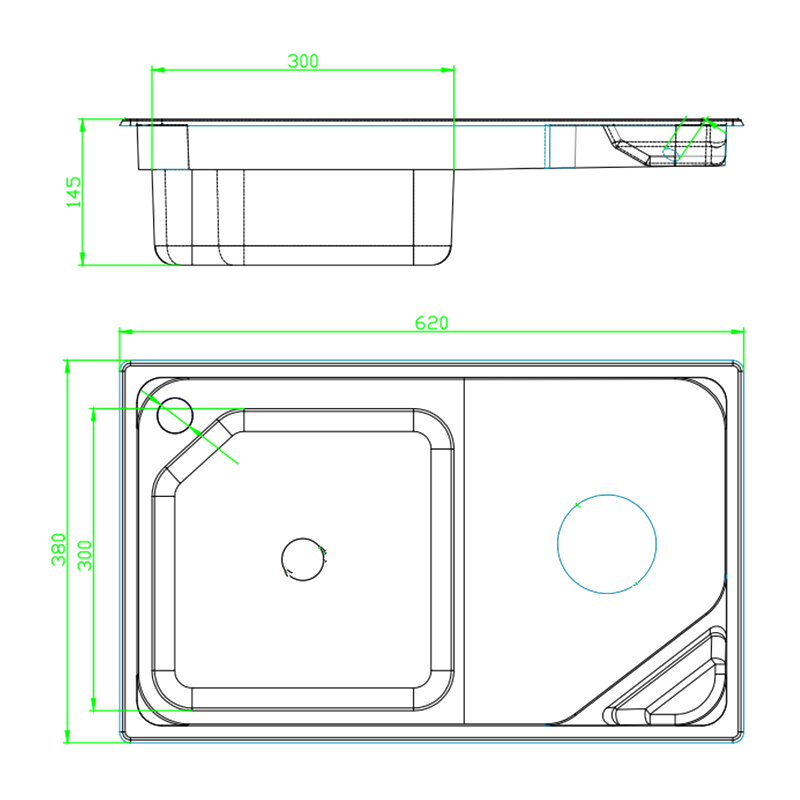
Before comparing products, record four figures from the existing installation. Measure the countertop cutout width and length, not the old sink, because the flange is always larger than the hole it covers. Note the corner radius, usually between 6 and 25 mm, since sharper corners will not drop into a rounded opening. Check the clearance to the backsplash and front edge so the new flange can sit flat. Confirm the faucet hole spacing as well; most RV faucets use a single hole or a 4 inch centerset.
Cutout width varies more across vehicle types than most buyers expect. Small teardrop trailers often start near 10 inches, campervans cluster around 12.8 inches, and travel trailers commonly use 15 inch cutouts. Fifth wheels and motorhomes move up to 17 or even 20 inches to fit larger single bowls or combo units. The chart explains why measuring your own cutout matters more than reading a category label, because two trailers of similar length can follow different standards. When the replacement matches these typical widths, it usually drops straight into the existing opening without countertop surgery.
Material choice is where RV replacements differ most from household upgrades. A mobile kitchen lives with vibration, humidity during storage, temperature swings and occasional salt air, so the material must resist corrosion without adding weight. 304 stainless steel, an alloy with 18 percent chromium and 8 percent nickel, meets those demands and has become the standard for RV, caravan and marine sinks. Cheaper grades save a little up front but tend to show surface rust within a few seasons.
| Material | Weight, 15 by 15 in bowl | Corrosion resistance | Heat tolerance | Best suited for |
|---|---|---|---|---|
| 304 stainless steel | 4 lb | Excellent, handles road salt and humid storage | Very high, tolerates hot pans | Most RV, caravan and marine kitchens |
| 201 stainless steel | 4 lb | Moderate, may pit in coastal air | High | Budget replacements in dry climates |
| Acrylic | 5 lb | Good, but scratches easily | Low, softens near heat | Light use where noise matters most |
| Enameled steel | 9 lb | Good while the coating is intact | High | Restorations matching original parts |
| Cast iron | 18 lb | Good | Very high | Household kitchens, rarely RVs |
Weight decides how much stress a replacement adds to a thin plywood or aluminum countertop. A 304 stainless steel bowl of about 15 by 15 inches typically weighs close to 4 pounds, while the same footprint in enameled steel approaches 9 pounds and cast iron can exceed 18 pounds. Every extra pound multiplies its effect when the vehicle hits potholes, because a heavy bowl works against clips and sealant that were never designed for that load. Heavy sinks also stress the counter around the faucet opening, which is where many slow leaks begin. This is a key reason household sinks are a poor direct swap and why purpose built RV sinks stay light without losing rigidity.
Once size and material are settled, the remaining decision is layout. Three formats cover nearly every replacement scenario.
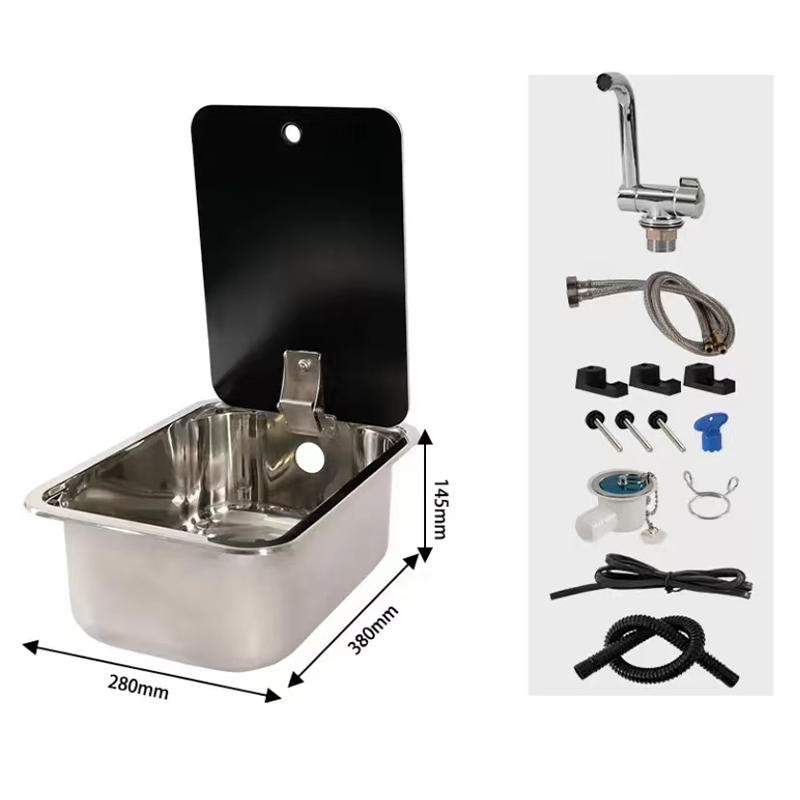
This is the most common swap because it mirrors household proportions while staying light. The tempered glass cover doubles as a preparation surface when the bowl is not in use, which matters in a galley where counter space is measured in inches.
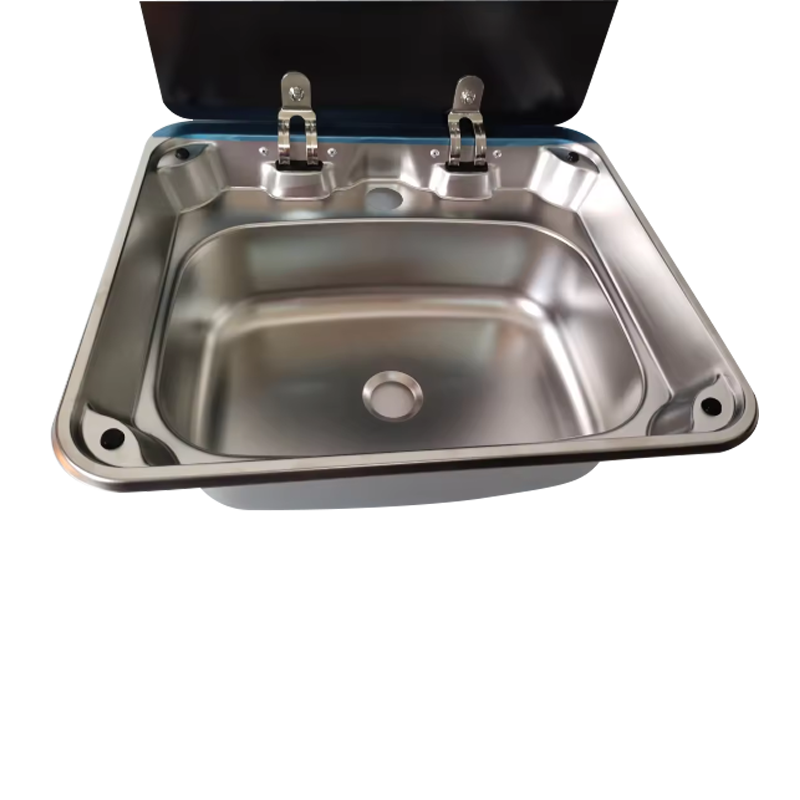 304 Stainless Steel Single Bowl RV Sink with Glass Cover A compact single-bowl sink in 304 stainless steel with a tempered glass lid that doubles as a work surface, sized for caravans and motorhomes where counter space is limited and proportions matter. View Product →
 If the cooktop is worn out too, a cooker sink pairs one or two burners with the bowl behind a glass cover, consolidating two appliances into a single opening. That reduces the number of countertop cuts and simplifies the gas and plumbing runs.
 304 Stainless Steel RV Cooker Sink with Glass Cover This cooker sink pairs a gas burner with a stainless bowl behind one glass cover, cutting countertop openings and simplifying gas and plumbing runs when both cooktop and sink need replacing. View Product →
 For full galley rebuilds, a combined gas stove and sink unit replaces separate appliances with one stainless assembly. Builders favor it for compact motorhomes, campers and boats where every inch of counter must earn its place.
 Integrated Campervan Hob and Sink Combi with Glass Lid A one-piece gas stove and sink assembly in 1 mm 304 stainless steel with a satin electropolished finish, suited to full galley rebuilds in campervans, caravans and boats where every inch counts. View Product →
 Two numbers on the spec sheet predict how a sink will age: sheet thickness and steel grade. Look for 0.8 to 1.0 mm thickness, sometimes listed as 20 to 22 gauge; thinner sheet drums under running water and dents easily, while thicker sheet adds weight the countertop does not need. On grade, insist on type 304, sometimes marked 18-8 for its chromium and nickel content. The chart below shows why grade matters more than any other material decision.
Corrosion resistance is a long game, and the gap between steel grades appears over years rather than weeks. The chart uses an illustrative index where 100 represents a factory fresh surface, based on how these grades behave in salt spray and humid storage. A 304 stainless steel sink holds its index above 90 even after a decade of service. Lower cost 201 grade loses ground steadily and often shows pinpoint rust by year five or six. Galvanized steel, which appears in some budget sinks, falls fastest once the zinc layer wears through. If you store the RV near the coast or through winters, the distance between these curves is the practical reason to insist on 304.
Replacement itself is a one afternoon job with hand tools. Work in this order:
The most common failure point is the sealant, not the sink. Use a marine grade silicone, apply it in one unbroken bead and resist over tightening the clips, which warps thin stainless flanges. If you are unsure how the supply side is plumbed, our guide to what supplies water to the RV sink covers the pump, lines and check valves you will disconnect.
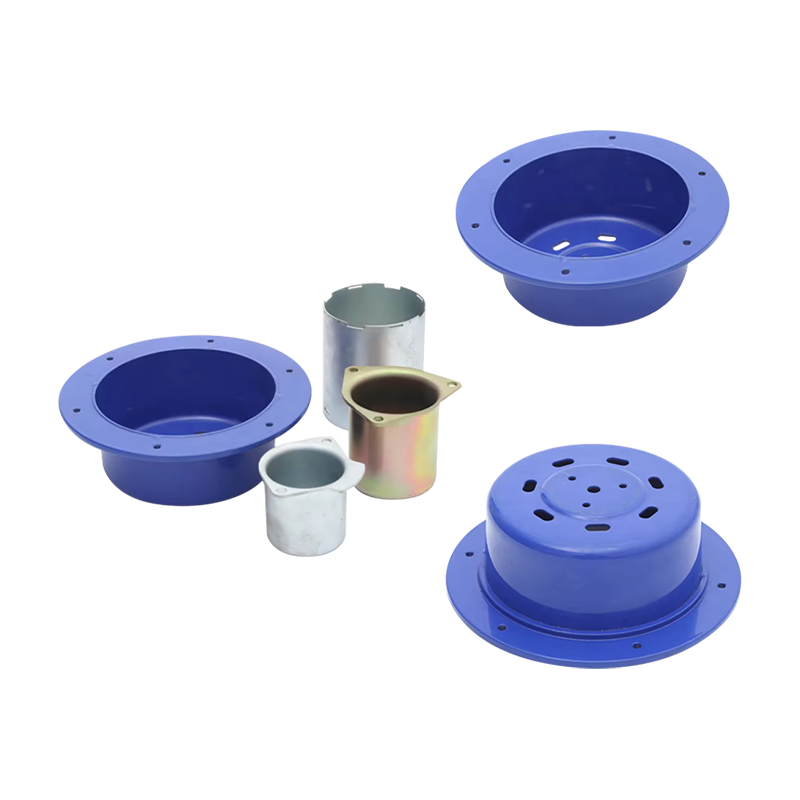
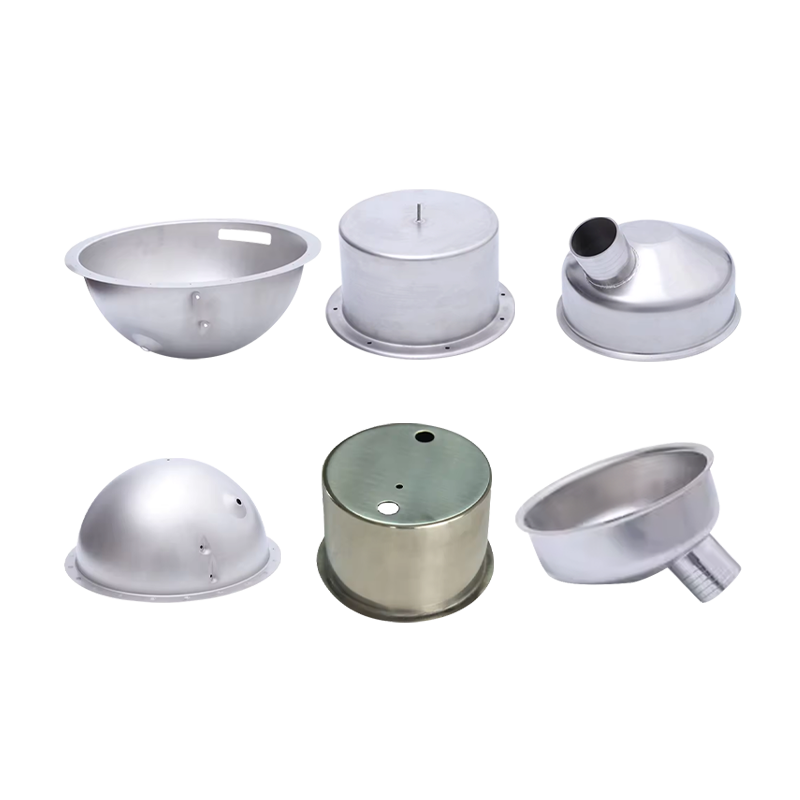
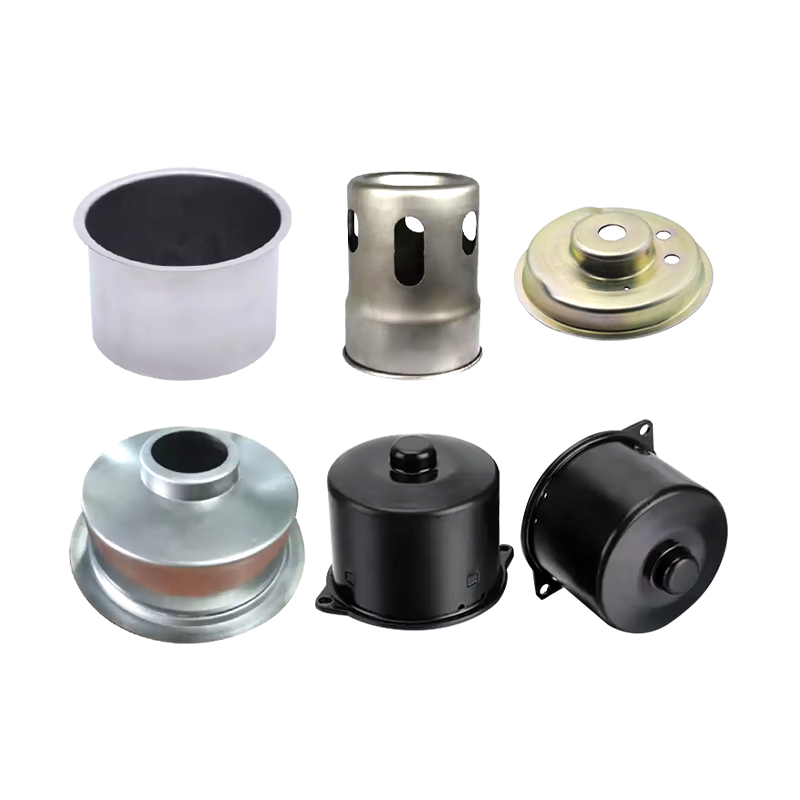
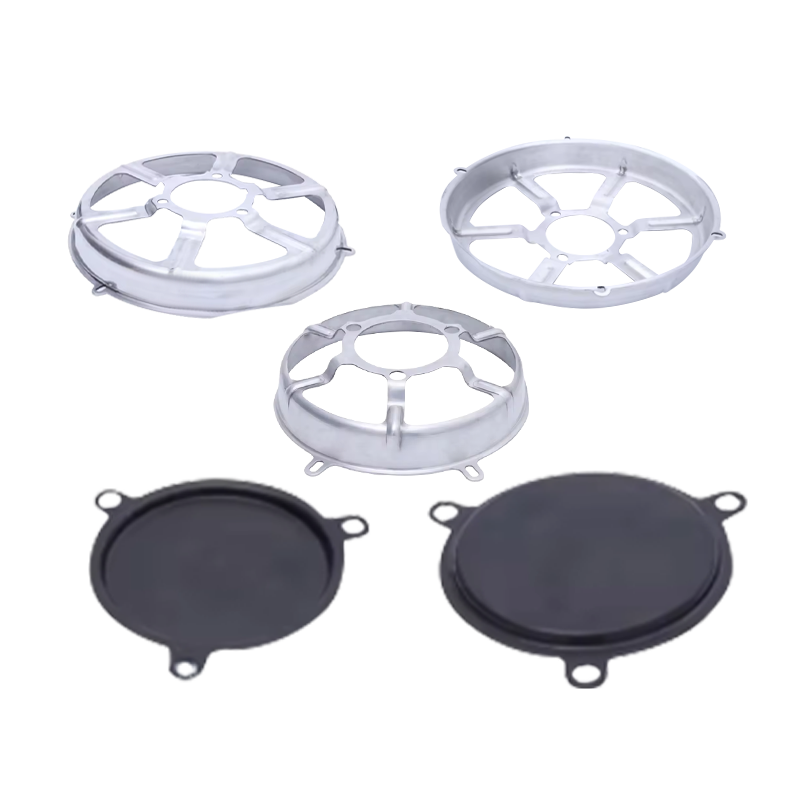
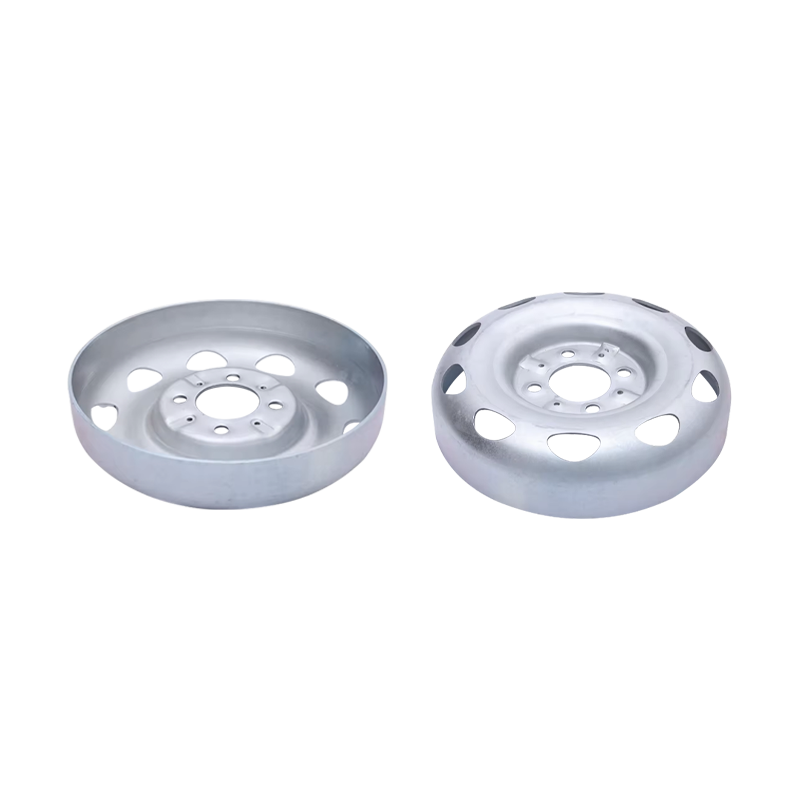
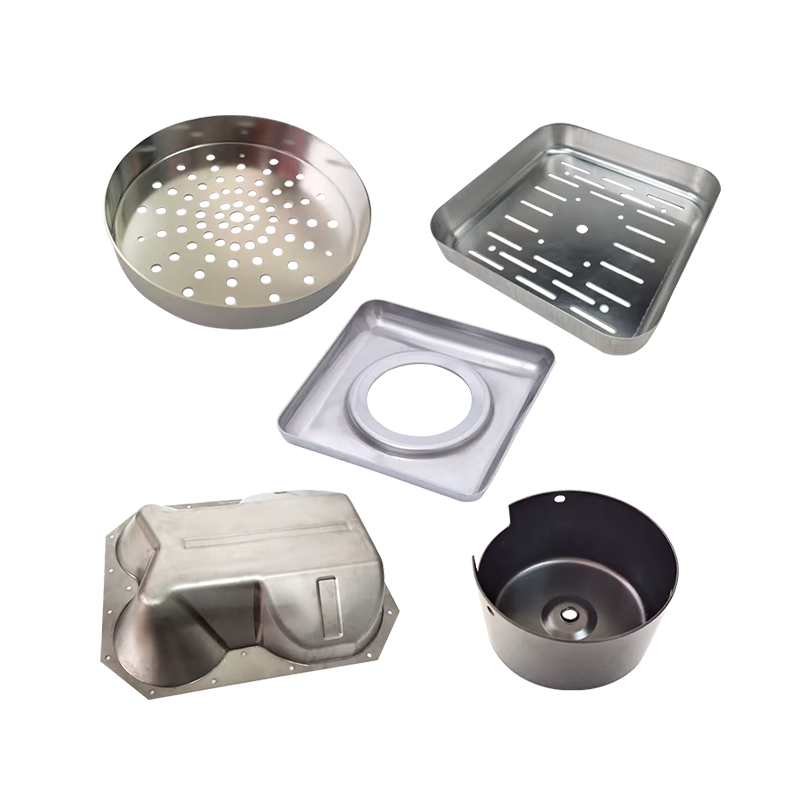
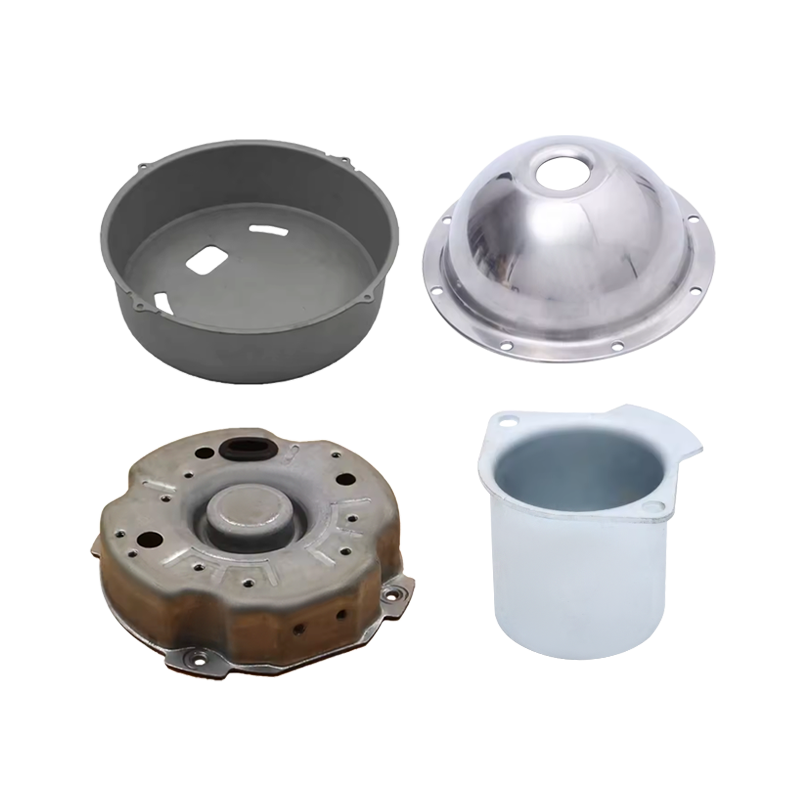
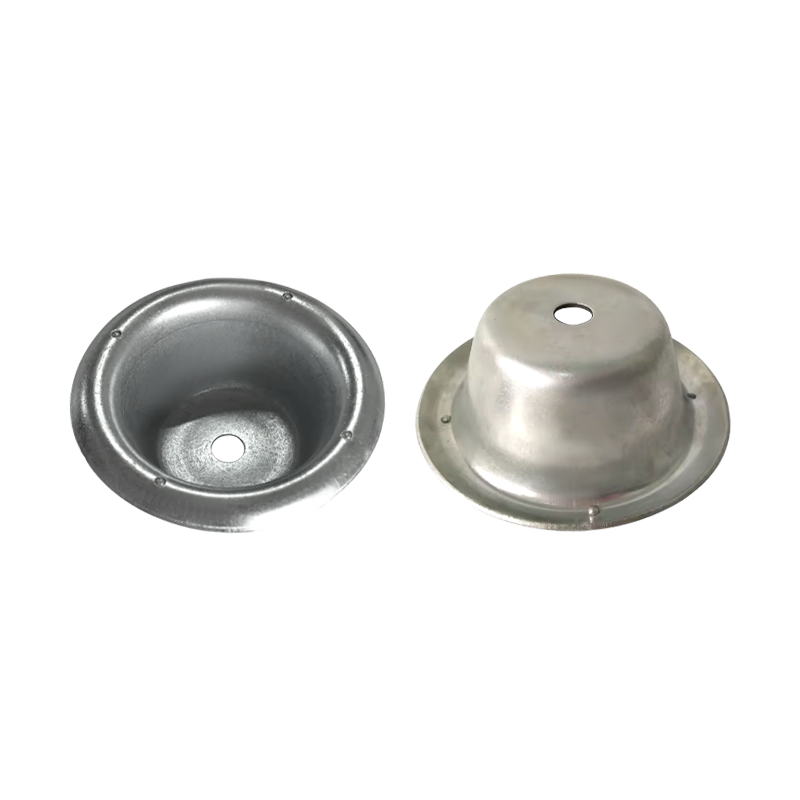
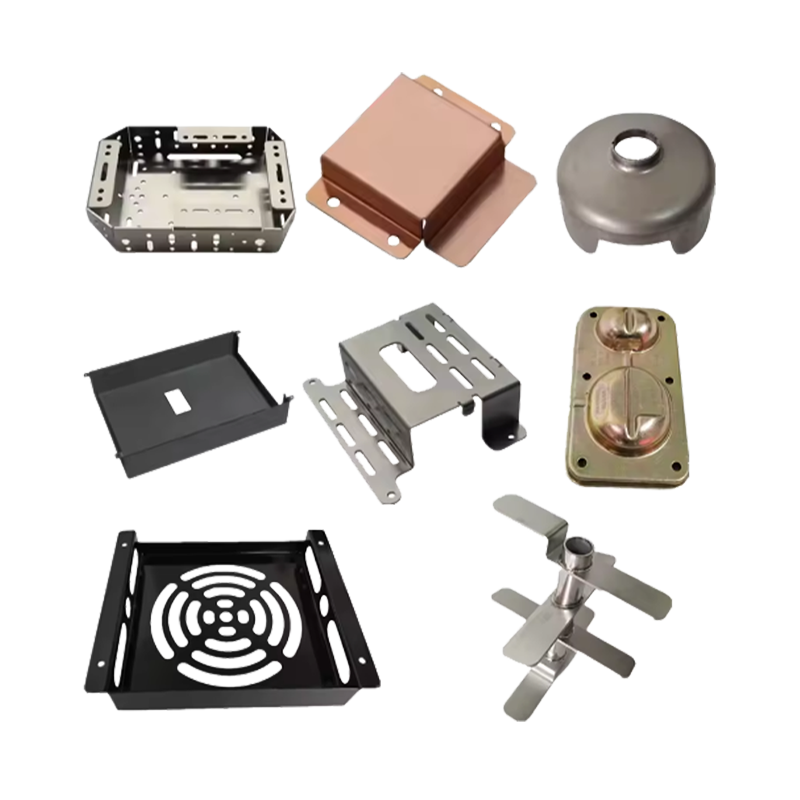
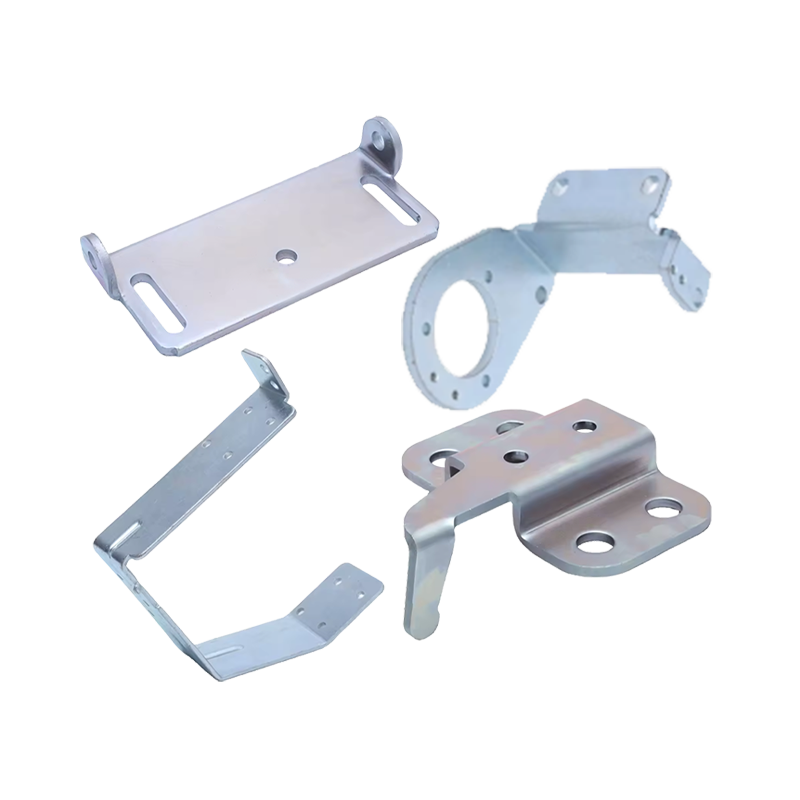
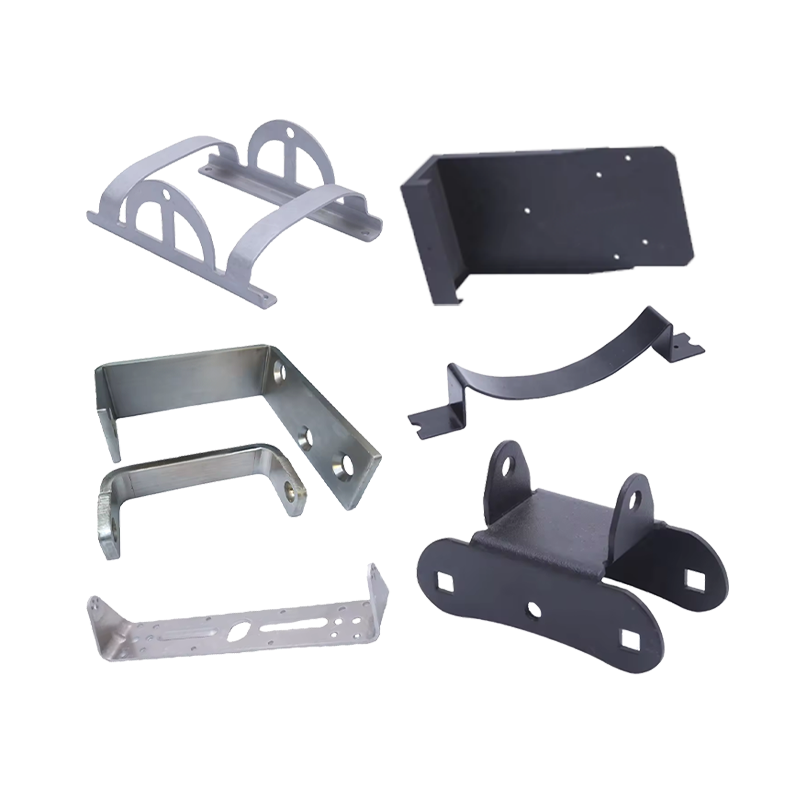
Older caravans, custom builds and European imports sometimes have cutouts that match nothing on the shelf. In that case, order from a manufacturer that forms deep drawn stainless steel parts as per drawing or samples . Deep drawing shapes the bowl from a single sheet with no welded corners, which removes the seams where rust usually starts. A factory that builds its own tooling can adjust bowl depth, deck layout and corner radius to your measurements instead of forcing you to cut the countertop.
This radar compares 304 stainless steel with acrylic across the five factors that matter most in a replacement sink. Stainless scores higher on dent resistance, heat resistance and corrosion resistance, the three areas where moving vehicles punish materials hardest. Acrylic holds an edge on cost and on quiet operation, because it absorbs the sound of running water better than metal. Stainless still earns a strong weight efficiency score, since a 0.9 mm wall keeps the bowl light while the drawn shape adds stiffness. If your trips involve hot pans, tight cabinet clearances and long storage periods, the shape of the blue polygon explains why 304 remains the default choice. If you rarely cook and prioritize budget, the gray acrylic profile can still be a rational pick.
Swapping an RV kitchen sink is a one afternoon project when measurements come first. Confirm the cutout, choose 304 stainless steel in 0.8 to 1.0 mm sheet, pick the layout that matches your cooking habits, and seal it with one continuous bead of marine grade silicone. Do that, and the new bowl will shrug off potholes, humid storage and hot pans for as long as you own the vehicle.
Camper Cupboard Door Latch Guide: Types, Materials, and Sourcing Advice for RV Builders
RV Kitchen Sinks: Sizes, Materials and Buying Tips for Campers and Boats
Cibé an bhfuil tú ag iarraidh a bheith inár gcomhpháirtí nó go dteastaíonn ár dtreoir ghairmiúil nó ár dtacaíocht maidir le roghnú táirgí agus réitigh fadhbanna, tá ár saineolaithe réidh i gcónaí chun cabhrú laistigh de 12 uair an chloig ar fud an domhain
déan teagmháil Linn
Phone:+86 139-5824-9488
FAX :+86 574-86150176
E-mail: [email protected] [email protected]
Address: Aonad 2, Foirgneamh 19, Páirc Zhichuangzhizao, Crios Tionscail Chengdong, Xiangshan, Ningbo, 315705, Zhejiang, an tSín
A 200 W panel lying flat on a motorhome roof weighs almost nothing while the vehicle is parked. At ...
A cupboard door that swings open every time the trailer hits a washboard section is more than a sma...
Water stains around the faucet, a hairline crack along the rim, or a worn out cooktop cutout eventu...
